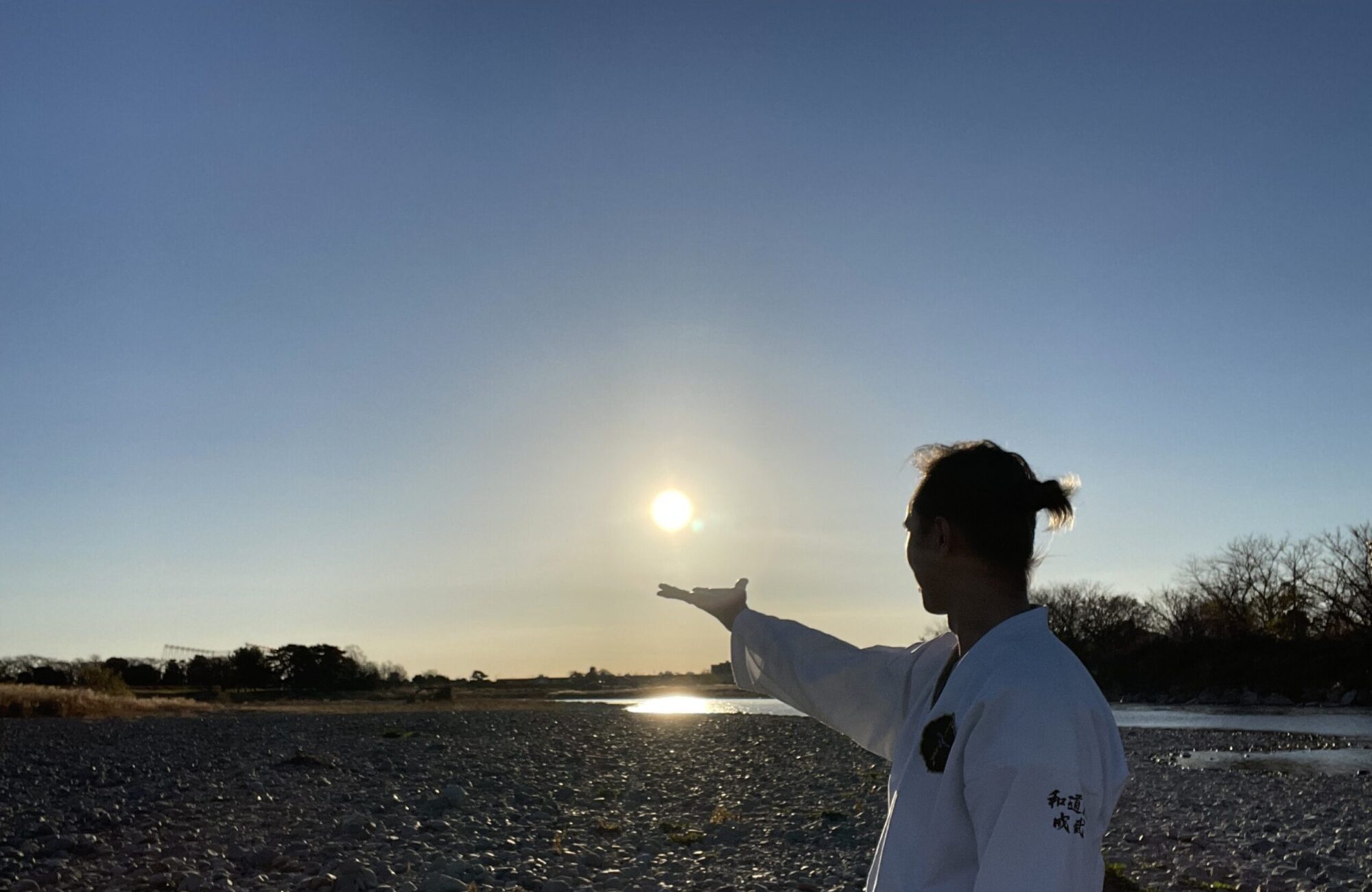
Sunday, August 2, 2026 This morning, we held another intensive training session in preparation for the 62nd National Tournament of the Wado-ryu Karate-do Renmei, scheduled for the end of this month. Despite the early hour, my students showed no signs of drowsiness; instead, they demonstrated a genuine eagerness to train. My role is not merely to prepare an excellent program, but to foster in my students the ability to anticipate potential situations, devise ways to overcome them, and respond effectively. I am convinced of this because it is a lesson I learned through Karate-do—a skill that has helped me navigate crises and employ successful tactics during competitions. Even in the sweltering heat of a dojo without air conditioning, my students remained focused and trained diligently, with not a single person suffering from any health issues.
With only five weeks remaining until the 62nd National Tournament of Wado-ryu Karate-do Renmei, we began our annual joint intensive training sessions today. We were blessed with clear weather this morning, but the heat inside the gymnasium—which lacks air conditioning—was intense; nevertheless, everyone stayed focused on their training without faltering. I truly admire the students who join me in studying and practicing challenging concepts: shifting the center of gravity; external and internal leg rotation; compression and expansion; rotational movements in opposing vertical directions; Mahanmi-no-neko-ashi-dachi and footwork; rapid changes of direction; and the interplay between abdominal pressure, the center of gravity, and the tanden. For children, summer vacation is undoubtedly a time when they want to play to their heart’s content. Yet, they set that desire aside to participate in training because each of them has a goal. I am fully committed to supporting and assisting them in their efforts.
1988年9月、当時10歳だった私は空手の道の入門を許され、生涯の師と仰ぐ瀬田松弘昌先生に出会い師事しました。瀬田松先生の師匠は、和道流の流祖である大塚博紀初代宗家で、瀬田松先生は大塚初代宗家の話を私に沢山して下さいました。それは終戦後、当時20代前半の瀬田松先生は大塚初代宗家の元を訪ねた際、大塚初代宗家は温かく迎えてくれて熱心に稽古をつけてくれて決して忘れることのない日々になった話や瀬田松先生の地元である函館に大塚初代宗家を招き稽古をつけてもらった話、30代前半で故郷を離れる決意をし上京して和道流空手道・柔術拳法の総本部道場に入門し大塚初代宗家の直弟子となって稽古に励まれた日々の話、大塚初代宗家の自宅を訪れる時に持参した和菓子を毎回喜んで食べてもらった話、大塚初代宗家の直弟子たちは皆強く、総本部道場に腕試しに来た者たちは帰る時は全く違う態度と身体の状態になっていた話、大塚初代宗家の教えを一つも忘れまいと寝ずに稽古に励んだ翌日、大塚初代宗家から「昨日教えたことは忘れて。もっと良いことを思いついたから変える。今日覚えて。」と言われ、直弟子たち皆必死になって覚え直した日の話。 瀬田松先生が大塚初代宗家の話をする時はいつも笑顔でした。その笑顔を見ると私は「大塚初代宗家も瀬田松先生も直弟子の方々も、皆んな毎日が楽しくて充実してたんだろうな。師匠の大塚初代宗家が和道流という素晴らしい武道を生み、より良くしようと創意工夫を重ねる姿を瀬田松先生も直弟子の方々はそばで見ていて、『自分たちも協力したい!力になりたい!お役に立ちたい!』って思っていたんだろうなあ。」と想像し、一緒になって楽しく嬉しい気持ちでいっぱいでした。 瀬田松先生は2017年11月14日に天に召され、私は師匠に会うことも話すことも出来ません。しかし、不思議なことに言葉が降りてくる感覚を何度も持ったことがあります。武道が大好きな方々同様に、私も四六時中和道流のことを稽えています。歩いてる時も、食事中も、テレビを見ていたり、本を読んでいても、『基本が何に繋がり、何を生み出せるか』と稽えていると、突然、閃く瞬間が訪れたり、夢の中に大塚初代宗家や瀬田松先生が現れて、私に稽古をつけてくれることがあるのです。 時が何年経っても、お姿は見えなくなっても、先人たちは私たちに伝えたいことがあるに違いありません。私はその想いに触れたいし、理解したいし、実現したいと思っています。 『武の道はただ荒事とな思ひそ 和の道究め和を求む道』 In September 1988, at the age of ten, I was accepted into the world of karate and began studying under Master Hiromasa Setamatsu, whom I would come to revere as my lifelong mentor. Master Setamatsu’s own teacher was Hironori Otsuka, the First Soke and founder of Wado-ryu; he often shared stories about the founder with me. He told me about visiting the First Soke in his early twenties—just after the war—and being warmly welcomed and coached with such passion that the experience became unforgettable. He spoke of inviting the First Soke to his hometown of Hakodate for training sessions; of leaving home in his early thirties to move to Tokyo, where he joined the Wado-ryu Karate-do and Jujutsu Kenpo headquarters dojo, became a direct disciple, and devoted himself to training; and of how the First Soke always delighted in the Japanese sweets he brought when visiting his home. He recounted how the First Soke’s direct disciples were formidable martial artists—so much so that challengers who came to the headquarters dojo to test their skills would leave with completely different attitudes and physical conditions. He also shared a story about a day when, after staying up all night training to ensure they wouldn’t forget a single one of the First Soke’s teachings, the master told them, “Forget what I taught you yesterday. I’ve come up with something better, so we’re changing it. Learn this instead”—prompting all the direct disciples to scramble to learn the new method. Master Setamatsu always smiled when he spoke of the First Soke. Seeing that smile, I would imagine the lives they led: “The First Soke, Master Setamatsu, and all the direct disciples must have found every day joyful and fulfilling. Watching their master—the First Soke—create the magnificent martial art of Wado-ryu and constantly innovate to refine it, they must have felt a burning desire to cooperate, to lend their strength, and to be of service.” Imagining this filled me with a sense of shared joy and happiness. Master Setamatsu was called to heaven on November 14, 2017; I can no longer meet or speak with my mentor. Yet, strangely enough, I have often experienced moments where insights—words of wisdom—seem to descend upon me. Like all true lovers of martial arts, I contemplate Wado-ryu constantly. Whether I am walking, eating, watching television, or reading a book, if I am pondering the nature of the fundamentals—what they connect to and what they can create—sudden flashes of inspiration occur. At times, the First Grandmaster Otsuka or Master Setamatsu even appear in my dreams to instruct me. No matter how many years pass or how their physical forms fade from sight, our predecessors surely have things they wish to convey to us. I desire to touch upon those sentiments, to understand them, and to bring them to fruition. “Do not mistake the martial path for mere violence; it is a path of seeking harmony through the mastery of the Way of Harmony.”
A wonderful tournament to nurture the healthy mind, body, and spirit of children! On Sunday, June 7th, the 3rd Kanagawa Prefecture Tournament of the Wado-ryu Karate-do Renmei was held at the Yokohama Budokan. A total of 345 participants took part in this tournament, with 18 members from my institute’s Wado-ryu Seibu team and 8 members from my sister dojo, Yurigaoka Karate-do Club team, competing. The results were: 2 gold medals, 4 silver medals, 7 bronze medals, and 4 Fighting Spirit Awards.
My son, now in his 2nd glade of junior high school, reached the finals in both the kata and kumite divisions, and although he lost, he secured 2nd place. More than the wins and losses, I was happy to see the improvement in his mind, technique, and physical condition, and my son happily told me about it. He said that the tournament champion, whom he had considered his rival for the past three years, had approached him after the competition and asked him to take a picture together. Like me, my son has continued to participate in tournaments with the goal of “connecting with others and becoming friends through the competes,” and I am happy that he was able to have the experience he wanted.
(挿入曲) ラストソング Last Song When the curtain falls, we’ll be apart 幕が下りれば 僕らお互いに離れ離れ Isn’t it ironic, only at times like this 皮肉なもんだな こんな時だけ How quickly it all passes by あっという間に過ぎ去るなんてさ If we have a ‘see you later’, any farewell becomes easier またね”があれば どんなお別れもマシになるね When will we no longer be able to say it? Can’t think about it いつ言えなくなるだろう? 考えちゃだめだよなぁ Whenever it is, it’ll feel empty いつだとしても虚しくなるから The sparkle of a summer melts the ice ひと夏の煌めきがICEを溶かしていく In a feeling so similar, just a little bit それによく似たやるせなさにはほんの少しだけ The taste of the moment mixes sweetly 刹那の味が甘く混ざり合う It’s sad that today is ending 今日が終わるのが悲しいから Please, morning sun, don’t come out again 朝陽よ二度と出てこないでと I twisted the clock tightly, a comforting sound 時計をぎゅっと捻ったら慰めの音がしたよ I’m not done playing yet, I want to sing more まだ遊び足りないよ もっと歌いたいのにな Because there’s an end, everything is beautiful 限りがあるからこそ全ては美しいんだと To me, who’s cowardly with such logic そんなど正論臆病な僕には It’s too much to bear 振り過ぎて聞けたもんじゃないな With each passing day, little by little 月日を重ねるたび少しずつできていく The gaps in my heart, like a crossword puzzle, are filled クロスワードみたいな心の隙間埋められるのは With exchanged words, promised time 交わした言葉 約束の時間 What always lingers after it’s over いつも終わってから漂うのは Is the scent of the gunpowder from handheld fireworks 手持ち花火の火薬の香り Clings and doesn’t let go, the dazzling voice that remains on my fingers まとわりついて離れずに指に残る眩い声と The blue and hot ringing in my ears, I want to hear more 青くて熱い耳鳴り もっと聞きたいのにな The memories we created together 君と作り上げた思い出と To not let this happiness fade away このHAPPYを絶やさないように I’ll make a sound of laughter, deliver a ‘see you later’ 僕は笑い声を立てる “またね”を届ける嘆きの雨に In the rain of lament, getting a little wet 少し濡れながら Even if it’s the last day on Earth 地球最後の日だとしても It’s sad that today is ending 今日が終わるのが悲しいから Please, morning sun, don’t come out again 朝陽よ二度と出てこないでと I twisted the clock tightly, a comforting sound 時計をぎゅっと捻ったら慰めの音がしたよ I’m not done playing yet, I want to sing more まだ遊び足りないよ もっと歌いたいのにな I want to sing more もっと歌いたいのにな
When I asked Mike Sensei, “I want to show my students Budo kumite, not competitive kumite, just like we did in the finals of the international tournament two years ago, so would you be willing to Kumite with me?”, he readily agreed. I have always hoped for a world where people of all nationalities, religions, skin colors, ages, and genders can join hands and share the effort and significance of creating harmony, and I believe that the path of Budo is what has been given to me to make that a reality.
We were able to successfully conclude our “Exchange Training Sessions” and “Exchange Competitions,” which were held every Sunday in May. In Japan, May is a busy month with elementary, middle, and high schools holding their sports days on Saturdays, and parents must have had no time to rest due to the daily events. I understand this well, as I also have children in elementary and middle school. Parents who can witness their children’s growth, and children who experience their parents’ kindness, must remember that these things are not taken for granted, but are made possible by the support, cooperation, and encouragement of people other than themselves and their families. Every time I hear news about the war, I remember my grandmother’s stories. In 1987, when I was 10 years old, my grandmother told me, “42 years ago, when your father was only two years old, I held him and ran through town trying to escape. Fire was raining down from the sky like rain. I held your father tightly and ran, determined not to let him die.” Looking into my grandmother’s eyes, I thought, “Grandma, you must have been so scared,” and at the same time, “I was born because Grandma protected my father.” The reason I started karate is because I wanted to grow into a strong and kind person who could protect my family. “Protect”, “Defense” and “Save” are the core principles of my life.
Someone told me long ago ずっと前、誰かが俺にこう言った There’s a calm before the storm 「嵐の前には静けさがある」 I know, it’s been comin’ for some time そうだな、そんな事がたまにある When it’s over, so they say その後に、彼らはこう言った It’ll rain a sunny day 「晴れた日に雨が降る」 I know, shinin’ down like water そうだな、水のように光りながら I wanna know, have you ever seen the rain? 教えてくれ、君は”その雨”を見たかい? I wanna know, have you ever seen the rain? 教えてくれ、君は”その雨”を見たかい? Comin’ down on a sunny day 晴れた日に降る雨を Yesterday, and days before 昨日も、その前も Sun is cold and rain is hard 太陽は冷たく、雨は激しい I know, been that way for all my time そうだな、ずっとそんな調子さ ‘Til forever, on it goes 永遠に終わらず Through the circle, fast and slow 繰り返すのさ、速くそしてゆっくりと I know, it can’t stop, I wonder そうだな、きっと、止められないんだろう I want to know, have you ever seen the rain? 教えてくれ、君は”その雨”を見たかい? I want to know, have you ever seen the rain? 教えてくれ、君は”その雨”を見たかい? Comin’ down on a sunny day 晴れた日に降る雨を
『warship boy』 The lake of memories, hidden deep, deep When my eyes meet those memories A sudden loneliness overwhelms me Gentle and lonely If it exists somewhere, if it exists somewhere Even if it’s the same thing, or something different that makes me forget it, that’s fine If there’s an answer, if there’s an answer I’ll keep searching tomorrow for the things I can’t find even when I search my mind The light didn’t shine through, but by freezing, I held onto my feelings Seeking, searching, wanting to repaint, wanting to forget Sad, joyful If it exists somewhere, if it exists somewhere Even if it’s the same thing, or something different that makes me forget it, that’s fine If there’s an answer, if there’s an answer I’ll keep searching tomorrow for the things I can’t find even when I search my mind Searching…
広い荒野にぽつんといるよで 涙が知らずに あふれてくるのさ あの時風が流れても かわらないといった 二人の心と心が 今はもうかよわない あの素晴しい愛をもう一度 あの素晴しい愛をもう一度 Come Back Our Wonderful Love Since we vowed “till death do us part” We have made sweet memories When we saw a flower We agreed it was beautiful But now we’re not in harmony With each other anymore Come back our wonderful love Come back our wonderful love
We once sang “Red Dragonfly” together The sky is the same as it was then We watched the sunset As we walked side by side But now we’re not in harmony With each other anymore Come back our wonderful love Come back our wonderful love
I feel like I’m alone in the wilderness Tears keep welling up in my eyes We said any way the wind blew Our love would never change But now we’re not in harmony With each other anymore Come back our wonderful love Come back our wonderful love
In demonstrations of board breaking, I confront my own mind, technique, and body, including these fundamentals of physical movement, in order to understand whether or not I have achieved a trinity of these three elements. I also hope that by showing the results that this state produces, along with my attitude and posture, it will give my students an opportunity to feel something or to practice.
This is footage from my second world championship. At 27 years old, before I opened my dojo, I trained for a total of eight hours a day: two hours before work, one hour during my lunch break, two hours after work, and three hours at the dojo. Back then, I felt a sense of accomplishment from pushing my body to its limits, and I think I was just trying to force my techniques on my opponents during matches.
Now, 21 years later, I prioritize creating an environment where students with worries and goals can find hints that will lead to problem-solving and goal achievement. In matches, I aim for a connection and harmony of mind, technique, and body not only with opponents but also with referees, staff, and spectators. —————————————- ⑤ 身体操作の基本を用いて突きを速くするトレーニングを稽える Fundamental body mechanics are used in my training to increase the speed of TSUKI
⑴ ゴムバンドで拳立て伏せ knuckle push-ups with a rubber band ⑵ ゴムバンドで突き TSUKI with a rubber band ⑶ メディシンボールを前後 Medicine ball back and forth ⑷ メディシンボールを左右 Medicine ball left and right ⑸ ラダーを横移動 Move sideways on the ladder ⑹ ラダーの上を跳ねる Jumping on a ladder —————————————- ⑥ 身体操作の基本を用いて蹴りを速くするトレーニングを稽える Fundamental body mechanics are used in my training to increase the speed of KERI
⑴ ラダーで膝上げ Knee raises on the ladder ⑵ ラダーで腰捻り Twist your waist on the ladder ⑶ ハードルを横跳び Jumping over hurdles sideways ⑷ ハードルを片脚跳び One-legged jump over hurdles ⑸ ボックス三段跳び Box Triple Jump ⑹ 腰高ボックス跳び Jump onto a box that is waist-high —————————————- ⑦ 身体操作の基本を用いて足捌きを速くするトレーニングを稽える Fundamental body mechanics are used in my training to increase the speed of Footwork
⑴ 反り跳び Backbend jump ⑵ 押し相撲 Sumo wrestling ⑶ ラバーロープ Rubber rope ⑷ アブローラーバーピー Ab roller burpees ⑸ 四方反り跳び Four-way backbend jump ⑹ 落球を避ける Avoid the falling medicine ball —————————————- ⑧ 5テクニクスドリル ⑴ 刻み突き ⑵ 裏廻し蹴り ⑶ 中段廻し蹴り ⑷ 中上 ⑸ 上中 —————————————- ⑨ 身体操作の基本を用いて反応を速くするトレーニングを稽える Fundamental body mechanics are used in my training to increase the speed of Reaction
⑴ ハイプランク姿勢でボールを片手で掴む High Plank & Ball Catch ⑵ 頭上に投げた風船が床に着く前にゴムバンドを取って戻る Balloon & Rubber Band Catch ⑶ 指示に従い左右回りまたは四股立ちまたは突きまたは風船取り Round & Freeze ⑷ 取って取られての中で誰よりも先に3つを獲得する Be the first to acquire three ⑸ 三目並べ Tic-Tac-Toe ⑹ 突きと蹴りを組み合わせた連続技 A combination of TSUKI and KERI ⑺ その連続技に対して体捌き Body movement against that combination of moves —————————————- ⑩ 打ち込み ⑴ 防御のみ ⑵ 体捌き ⑶ 1本勝負